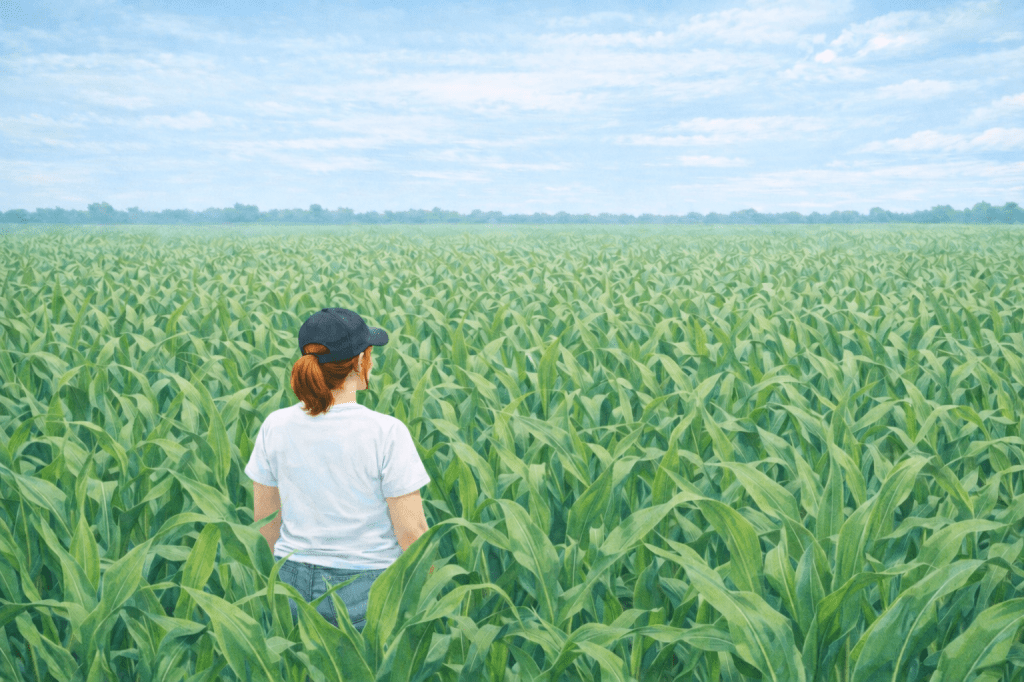
When you’re asked at seventeen what you want to do for the rest of your life, how are you supposed to know? Most of us are still figuring out who we are at that age, let alone committing to a lifelong plan, and that’s okay. Some of the most meaningful paths are the ones we never planned to take, and the unexpected turns often lead us exactly where we are meant to be.
Growing up in a small rural community, college felt like stepping into a completely different world. My freshman year brought new experiences, new exposure, and opportunities I didn’t even know existed. What stands out most when I look back is how supported and welcomed I felt. I was never made to question whether I belonged.
I graduated with my bachelor’s degree in Agronomy: Crop Sciences, with a minor in Agricultural business. After college, I spent several years working in agricultural sales. It was familiar, meaningful work, and I learned a great deal from the people and communities I encountered.
At the same time, I began to notice that, like many industries, agriculture has its own culture and expectations, often unspoken ones. Over time, I found myself reflecting not only on the work itself, but also on who feels welcomed, supported, and able to thrive in those spaces. Those experiences didn’t lesson my respect for agriculture. Instead, they deepened my awareness of how important it is to create environments where people feel valued, heard, and included. In many ways, that realization is what ultimately drew me back toward higher education.
Higher education is often imagined as a place where everyone is welcomed, supported, and treated equally. It is seen as fertile ground where students are encouraged to grow, explore new interests, and discover potential career paths. For many, it represents an ideal version of the world we hope exists beyond campus.
In the spaces I worked in, however, higher education was often reduced to labels and stereotypes. Universities were sometimes dismissed as out of touch, overly political, or disconnected from the real world. What was missing from those conversations was an understanding of what actually happens on a college campus. Universities are not just classrooms and textbooks. They are environments where students learn how to exist alongside people with different backgrounds, perspectives, and lived experiences. Equity and inclusivity are not abstract ideas, they are practiced daily through collaboration, support systems, and shared accountability. Those lessons shape how students learn to care for one another, and that depth of human experience does not always translate easily into industries rooted in tradition and long-standing systems.
This is not a critique of agriculture as a whole. It is an industry built on community, resilience, and pride. However, within certain long-standing subsets of the field, particularly those shaped by the good old boys mentality, there is often little room for conversations around equity, inclusivity, or change. As a woman working in those spaces, I burned out quickly, as many women in agriculture do. Not because the work lacked value, but because the culture made it difficult to feel supported, heard, or fully welcomed. That contrast became impossible to ignore.
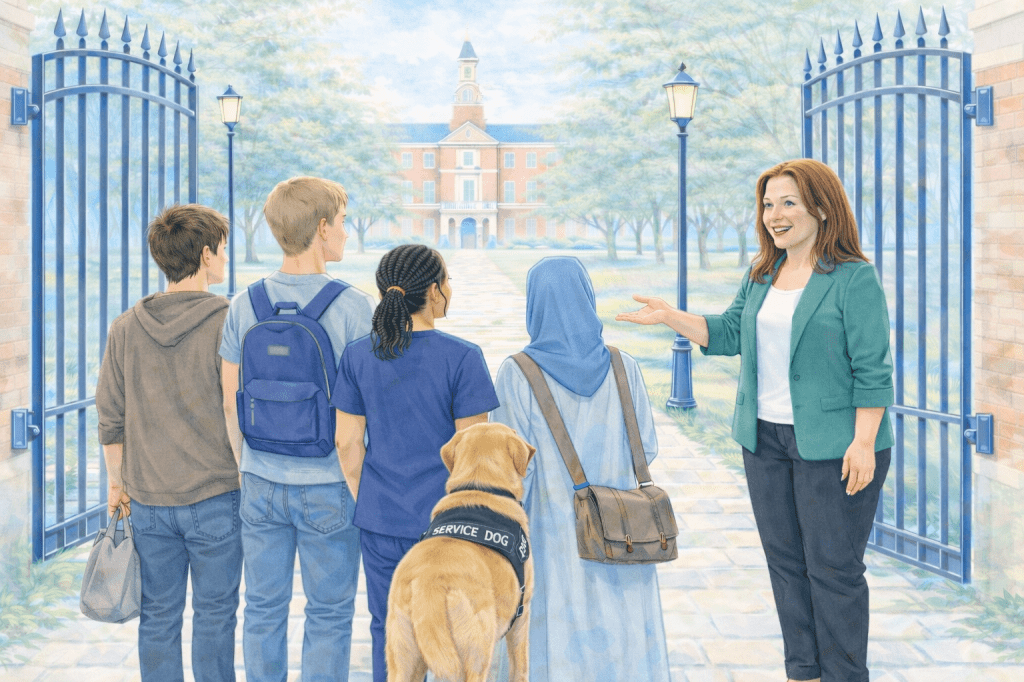
Having experienced feeling unsupported firsthand, I now carry a deeper empathy for students who are often viewed as outside the norm. That perspective has shaped the way I approach my work as a college advocate and recruiter. It has pushed me to look more closely at the barriers and systems that limit access and opportunity, and to question who those systems serve. Most importantly, it has strengthened my commitment to supporting and uplifting students who may feel overlooked or discouraged. In the process, it has not only made me better at my job, but a more thoughtful and caring human being.
This was not the path I envisioned for myself, but it is one I have come to value deeply. Higher education gave me more than a degree and returning to it has given me purpose. In many ways, this role feels like coming home. It allows me to lead with empathy, challenge systems that create barriers, and support students as whole people, not just applicants. That’s why I’m passionate about helping students find their place in agriculture and beyond through education.
There is something powerful about helping someone recognize their own potential. Supporting students as they navigate uncertainty and work toward goals that once felt out of reach is both a responsibility and a privilege I hold with great care. I did not plan to be here, but I am grateful every day that this is where I landed.
 Confessions of a College Recruiter
Leave a comment